
Musica retorica
Musica poetica
Musica romantica
ROBERT KANIA & JUAN ULLIBARRI
PIANO & ANCIENT CLARINET
WORKS FROM:
F. CHOPIN
R. SCHUMANN
C. SCHUMANN
Concert in support of the ‘Fondation EME’
Musica retorica, Musica poetica, Musica romantica
The title seems to suggest development, but this is not the case here.
Contrary to appearances, music of the romantism has a lot in common with baroque music rhetoric. Romantic creators use ancient composer techniques, ancient rhetoric figures, only modulations and decorative additives are, let’s say, ‘romantic’. I was the French Revolution that changed the approach towards the art. The new order in art focused on man and his feelings, at the expense of creating in the name of the Creator and his praise. Despite these changes, God - Absolute remained an extremely important inspiration for creators, while music remained the voice of sounds. Humans of the Romantic age still needed the existence of a superior being in order to be able to create, understand his art and be understood. It must not be overlooked that the human voice, as in the previous epochs, continued to be an indicator of creation of the beauty. And singing is a legato but articulated. It is therefore not just a matter of combining sounds, but of doing so with understanding. This method of performance implicates that a melody with accompaniment becomes a dialogue and not a melody with added accords. Mention should also be made of the extremely important role of text in music. It is the text that determines the nature of the piece, the choice of modulation, the type of ornaments. The importance of individual melodic returns should therefore be discovered in instrumental works. Understanding this will make us aware of how much romantic music has in common with baroque rhetoric.
Hence, the title: Musica retorica, Musica poetica, Musica romantica.
Some information about the clarinets we use in this recital. They are the romantic 12th keys instruments .One is an original ( C clarinet from H. Kayser)and two are copies (B and A from Bischoff )both were famous German makers contemporaries from Schumann. With the 12th key instruments is easy to achieve what Fetis in his Biographie Universelle (1839-1841) describe as German style “the accuracy in the execution of difficulties and the beautiful expressive style, the soft quality of sound”. In this time the clarinettists in their methods (for example Beer and Backofen) stress keeping the sound alive through the choice of fingering and the shaping of long notes. With the exception of the low register, they use the old cross fingerings and avoid to use the keys (just the opposite way as we do in our times). For the musicians in this time a sensitive note in a melody should be heard as high as possible, and the old fingering with his imperfections and difficulties to play equal in all clefs( heritage from the 5th key Mozart time instrument) had his advantages. As the famous clarinet and teacher Backofen wrote “Only the bare notes, played without feeling and expression, tell us nothing “ his talking about Musica retorica.
Several tutors from the time mention the art of playing preludes. Our recital is structured in such a way that Robert and Klara Schumanns’ works with clarinet are preceded by the preludes of F. Chopin. Despite stylistic diversity, the impression can be given that the compositions thus set together form a whole. We will quote Weber “True expression is only achieved when these contradictory characteristics are successfully blended”
PROGRAM:
1 .F .Chopin Preludium d -moll op 28 nr 24
2 .R.Schumann Fantasiestücke op.73 nr 1
3.F. Chopin Preludium F-dur op 28 nr 23
4. R. Schumann Fantasiestucke op 73 nr 3
5.F .Chopin Preludium fis-moll op 28 nr 8
6.R.Schumann Fantasiestücke op 73 nr 2
7.F Chopin Preludium es-moll op 28 nr.14
8.C Schumann Romanze Des -dur op 22 nr 1
9.F Chopin Preludium G-dur op 28 nr 3
10. C .Schumann Romanze g-moll op 22 nr 2
11.F Chopin Preludium B-dur op 28 nr 21
12.C.Schumann Romanze B-dur op 22 nr 3
13 F.Chopin Preludium a-moll op 28 nr 2
14.R Schumann a-moll op 94 nr 3
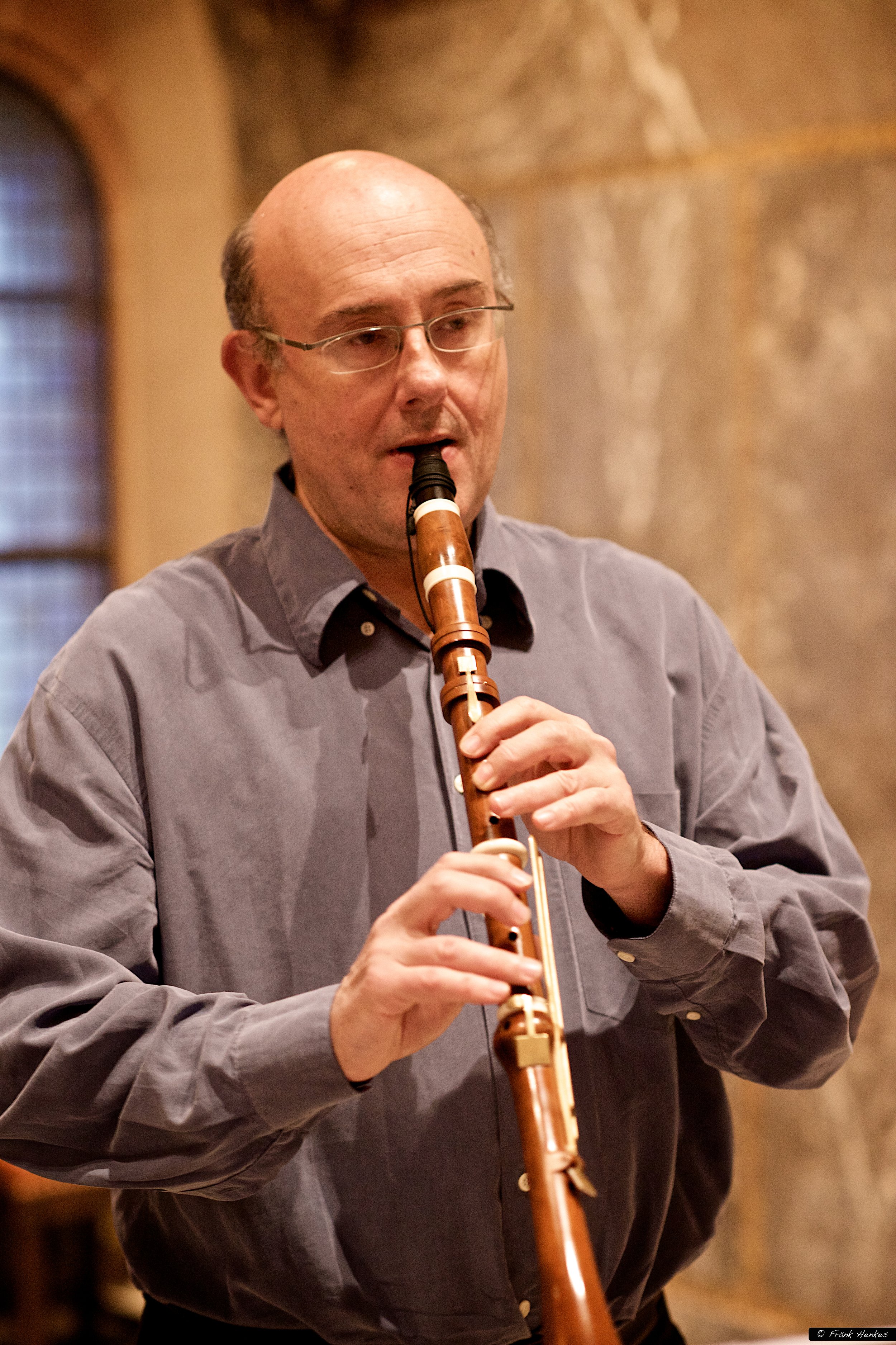
Juan Ullibarri studied clarinet and Basque three-hole flute (txistu) at the Conservatorio Superior de Música de San Sebastian. He was a member of the San Sebastian City Band and taught there and in Pamplona at the respective music academies. He later studied cornett with William Dongois in Paris and natural trumpet at the Schola Cantorum Basiliensis, and specialized in historical clarinets with Toni Salar Verdú. He also plays various folk instruments from the Renaissance, such as the bagpipes and albogue, as well as instruments from more distant traditions, such as the duduk (recording of the oratorio Nabucco by M. Falvetti with Capella Mediterranea in 2012) and zurna (world premiere of The Celestials of Sago Lane by Kerry Turner in 2015).
He has performed with the Freiburg Baroque Orchestra, La Chambre Philharmonique, Le Concert Spirituel, Opus 55, Ensemble Matheus, Concerto Köln, and the Lautten Compagney, among others, and is a regular guest with the Wrocław Baroque Orchestra, Capella Mediterranea Le Tendre Amour, and Glossarium.
With his ensemble Daksak, he also devotes himself to folk music, focusing on the different rhythms and modes in the Basque and Andalusian traditions.
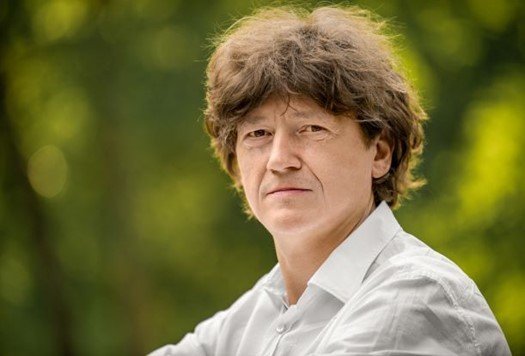
Robert Kania (born 1972) plays the harpsichord, organ and piano. He is a composer and arranger.
He studied music in Katowice (Poland), specialising in harpsichord and piano. He was a long-standing member of the Grand Theatre and National Opera in Warsaw. He has composed the music for several ballet performances for children and adults, which have been performed in Polish opera houses. He has long been interested in early music and has participated in numerous baroque and early music courses with famous musicians such as Evelyn Tubb and Andreas Lebeda as a harpsichord player. In 2005, he appeared in a BBC biographical film, ‘The Genius of Beethoven’, where he played the fortepiano. At the same time, he gained musical experience as an organist in Katowice and Warsaw. He performs in Luxembourg as a harpsichordist and organist, also working with Luxembourg choirs and singers. He prefers early organ music by N. Bruhns, S. Scheidt, D. Buxtehude and, of course, J. S. Bach. An important aspect of his musical activity is improvisation and basso continuo. He also plays piano in the jazz ensemble ‘Enigma’.
TICKET: 20€